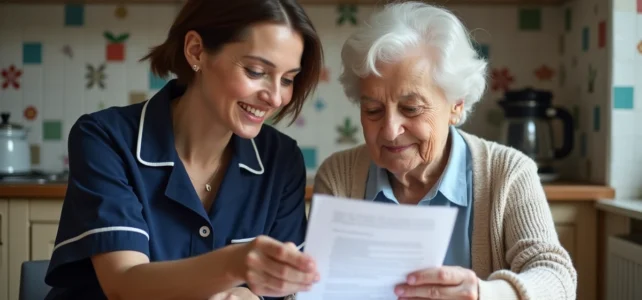
A parent living alone in Lille, a hallway too narrow for a walker, a pile of unopened administrative mail on the kitchen table. This is often the backdrop that triggers the first call. The first home visit is the concrete starting point of any assistance plan: it determines what will be put in place, at what pace, and with which providers.
Slippery rugs and night lighting: the on-site assessment that the phone cannot replace
You cannot identify a fall risk over the phone. The provider entering the home observes details that the senior themselves might not mention: the height of the bed, the layout of the bathroom, a poorly secured rug in the hallway, a light switch too far from the bedroom.
This physical assessment of the home lays the foundation for everything that follows. An online form or a phone questionnaire gathers statements. The home visit captures facts. The difference lies in very concrete points.
- The actual accessibility of rooms (width of doors, thresholds, interior steps) compared to what the senior recalls
- The condition of the kitchen and refrigerator, which provides better insight into daily nutrition than a direct question
- The lighting in the hallway at night, a frequent cause of falls that the person almost never mentions themselves
- The presence of accessible communication means (phone within reach, visible emergency numbers)
The home support with Gestea Senior Lille starts precisely with this inspection of the living environment, before any discussion about services or fees.
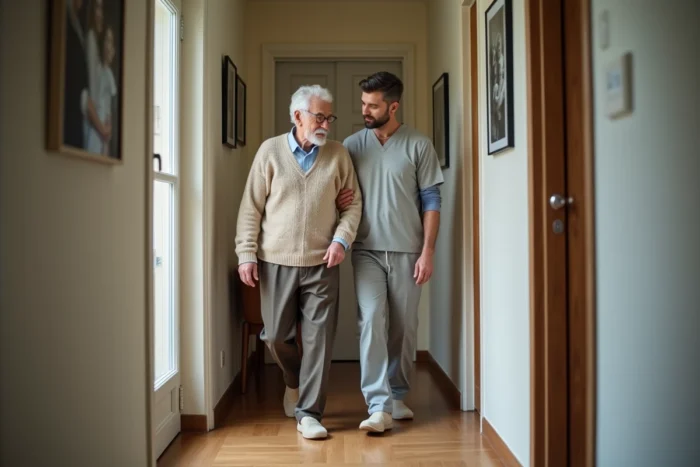
Multidimensional assessment at home: what the provider measures beyond the housing
The technical term used in the sector is “multidimensional assessment.” Behind this word lies a framework that covers several axes simultaneously. The provider does not just ask the question “what do you need”, they cross what they see with what the person and their relatives express.
Physical autonomy is the first axis: the ability to get up, move around, wash, prepare a meal. The second axis concerns cognitive and administrative burden. A person who still walks well may be completely overwhelmed by managing their mail, medical appointments, and interactions with their mutual insurance or pension fund.
The third axis, often underestimated, concerns social isolation and the mental burden of caregivers. The provider assesses whether the senior sees people, if they still go out, if a relative is solely managing care coordination and starting to feel exhausted. This last point radically changes the assistance plan proposed afterward.
What the family should prepare before the visit
Relatives are advised to gather a few documents: current prescriptions, the latest letter from the APA if it has already been granted, contact details of the attending physician. This is not mandatory, but it speeds up the assessment.
Being present during the visit also helps. The senior sometimes minimizes their difficulties, out of modesty or habit. A relative observing daily life provides additional insight without contradicting the person.
Coordination with the attending physician and construction of the assistance plan in Lille
The visit does not end when the provider leaves the home. The information gathered feeds into a personalized assistance plan that will be discussed with the attending physician and, if necessary, with other healthcare professionals already involved.
This coordination avoids duplication. In Lille, the Nord department counts over 250 home autonomy services. In this density of offerings, the main risk for a senior is not the lack of services but their poor coordination: a housekeeper coming in the morning when the nurse is already there, an administrative follow-up that no one takes care of because everyone thinks someone else is handling it.
The assistance plan formalizes who does what, how often, and with what funding. It specifies the selected interventions (help with bathing, home maintenance, administrative support, coordination of care) and distributes them throughout the week.
Funding and available assistance
The national base rate for home assistance for the APA and PCH was raised to 24.58 euros per hour in 2025, according to the CNSA. This rate serves as the basis for calculating coverage.
A point of caution concerns seniors aged 70 to 79 who directly employ a home helper: a decree plans to eliminate the exemption from employer contributions for these private employers starting in July 2026. For those using a service provider like Gestea Senior, this change does not apply in the same way, but it alters the overall calculation of out-of-pocket expenses for families combining direct employment and coordinated service.
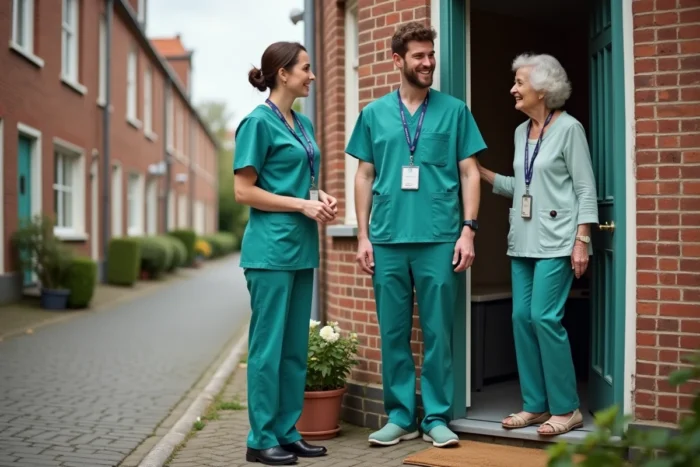
Follow-up after the first visit: adjustments and on-site reevaluation
A fixed assistance plan does not work for long. A senior’s autonomy evolves, sometimes within weeks after hospitalization or a prolonged episode of fatigue. Feedback varies on this point depending on the situations, but regular reevaluation remains the only way to adapt interventions to the current reality.
Gestea Senior Lille plans follow-up points with the family and the attending physician. These exchanges allow for adjusting the number of hours, modifying the type of intervention, or integrating a new need (support for outings, cognitive stimulation, help with meals).
The first home visit sets the framework, the follow-up keeps it alive. A senior whose situation changes between two reevaluations risks being left with an inadequate system, which generates exactly the type of difficulty that the initial visit sought to prevent.