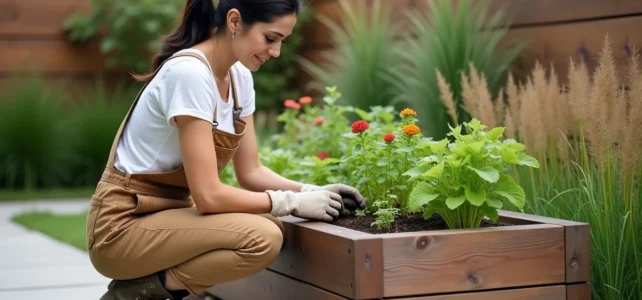
Designing a garden is no longer just about choosing between grass and gravel. Design tools have changed, composite materials have diversified, and water management has become a key parameter in any outdoor design project. Here’s an overview of the trends that are fundamentally changing the way we think about our green spaces.
AI-Assisted Preview: Test Your Layout Before Buying
In recent years, landscape design software has integrated artificial intelligence features capable of analyzing the existing components of a garden (terrace, flower beds, fences) and proposing pre-configured landscape combinations. The Fotor generator, for example, allows you to virtually test pergolas, flower beds, ponds, or vertical gardens before any expenditure.
This type of tool alters the decision-making process for individuals. Where a paper plan or a meeting with a landscaper used to be mandatory, digital pre-visualization offers a quick first filter. You can eliminate ideas that don’t work at the real scale of your land, compare libraries of plants and materials, and adjust the proportions of a design project without time constraints.
Field feedback varies on the reliability of these tools for very atypical spaces (steep slopes, shade cast by a neighboring building, clay soil). Modeling remains a decision-making aid, not a substitute for soil analysis or the expertise of a landscape professional. To explore the solutions offered by Clic Garden, it may be useful to cross-reference these digital suggestions with a catalog of concrete products suitable for your space.
Bioclimatic Pergola and Thermal Comfort in the Garden
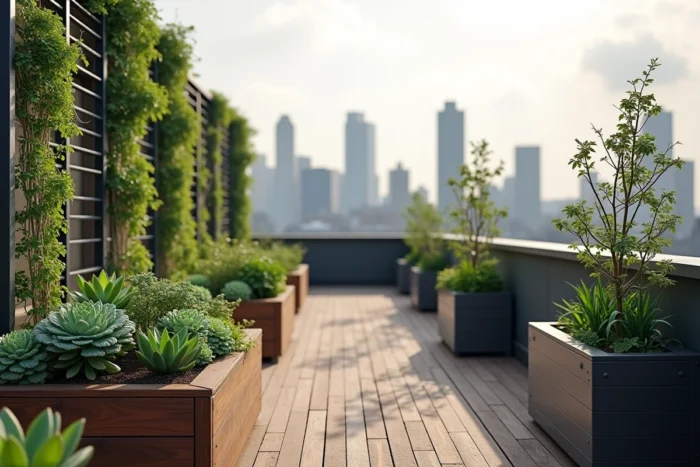
Recently published design guides place the bioclimatic pergola among the structural elements of contemporary gardens. The difference with a classic pergola lies in the motorized orientation of the slats: they pivot to modulate sunlight, ventilation, and protection from rain.
Some models incorporate sensors that automatically adjust the angle of the slats based on brightness or wind. This fine management of thermal comfort extends the use of the terrace throughout the year, without resorting to energy-consuming solutions like space heaters.
What the Bioclimatic Pergola Changes in a Global Project
Installing a bioclimatic pergola is not limited to placing a structure. It influences the choice of flooring (composite terrace, wood, porcelain stoneware), the placement of furniture, and sometimes the layout of surrounding flower beds. The design plan must integrate the pergola from the design phase, not as a late addition.
The available data does not yet allow for conclusions about the actual lifespan of orientation motors under all climatic conditions. Manufacturers announce varying warranties, and the long-term maintenance cost remains a point to clarify before purchase.
Integrated Rainwater Harvesting in Landscape Design
The integration of rainwater storage tanks directly into garden design is one of the trends that has accelerated in recent seasons. The idea is not new, but the way it is applied has evolved: buried tanks are combined with targeted irrigation systems, and some projects include landscaped swales (vegetated ditches) that direct runoff to natural storage areas.
- Buried tanks connected to gutters, with integrated filtration for watering flower beds and vegetable gardens
- Vegetated swales that slow down runoff and recharge the shallow aquifer while serving as an aesthetic element
- Rain gardens planted with species tolerant to alternating drought/saturation, which absorb excess water
This approach transforms water management into a visible component of the garden rather than a hidden technical constraint. A garden designed around water management consumes less and is more resilient to drought episodes.
Immersive Gardens and Sound Spaces: A Therapeutic Approach
“Sound sculpture gardens” and immersive gardens are gaining ground in residential design projects. The principle is to integrate elements that produce or modulate sound (variable flow fountains, tuned chimes, grasses chosen for their rustling) to create an environment conducive to stress reduction.
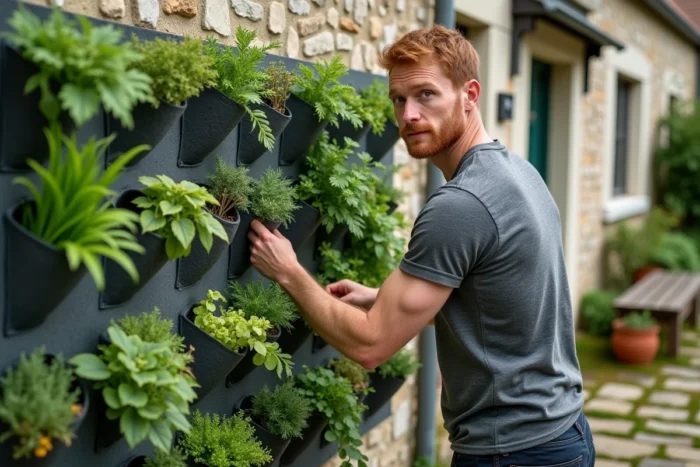
This approach is linked to the trend of outdoor meditation and yoga spaces. However, it is not limited to a decorative fad: sound gardens structure the space through acoustics as much as through visuals. A dense green wall dampens street noise, while a trickle of water masks residual sound nuisances.
Creating a Sound Space in a Small Garden
A small space paradoxically offers better acoustic control. The proximity of walls (fences, boundaries) allows for manipulation of reverberation. A few targeted choices are sufficient:
- A low-flow wall fountain, whose sound covers urban noises without creating nuisance for neighbors
- Tall grasses (miscanthus, stipa) planted along the edges, which produce a natural sound background in light winds
- A composite or wooden flooring rather than gravel, to limit footstep noise and maintain a subdued ambiance
The aesthetics of the sound garden relies on the coherence between visual plans and sound sources. A successful project does not multiply elements; it calibrates them.
Composite Materials and Maintenance-Free Terraces: Current State
Composite wood has established itself as an alternative to natural wood for garden terraces. Weather resistance, no annual treatment, and a wide choice of colors: the commercial arguments are well known. Field feedback varies on one point: heat behavior. Some composite boards heat up significantly more than natural wood in full sun, which limits barefoot comfort in summer.
The choice of terrace material also affects the maintenance of adjacent green spaces. A well-installed composite terrace facilitates the transition with flower beds thanks to finishing profiles that prevent the accumulation of soil and debris between boards and plantings.
The question of recycling at the end of life remains open for most composites on the market. Before validating a terrace project, checking the exact composition of the boards (percentage of wood, type of polymer) provides a clearer idea of their actual durability and environmental impact.
A garden designed around water management, thermal comfort, and sound ambiance does not resemble a catalog of trends. It is an assembly of technical choices that respond to each other. The material of the terrace influences comfort under the pergola, water recovery shapes the flower beds, and the acoustic plan guides the placement of plants. Each decision made in isolation weakens the coherence of the whole.