
Property management refers to all operations related to the administration of one or more properties: lease tracking, rent collection, maintenance coordination, regulatory compliance. When the portfolio exceeds a few units, these tasks generate a volume of data and interactions that spreadsheets and email exchanges can no longer handle. Recent digital tools do not just digitize documents: they restructure the processes themselves.
AI-driven workflows in rental management
Most rental management software available on the market already automates the generation of receipts or the sending of reminders. The next generation goes further: it chains multiple tasks in the same flow, without human intervention between each step.
Specifically, an AI-driven workflow can sort incoming tenant requests, identify the type of intervention needed, schedule an appointment with a service provider, and update the financial reporting of the property concerned. The manager only intervenes to validate or correct, instead of manually orchestrating each step.
This shift in logic changes the daily lives of real estate professionals. The time freed up from repetitive tasks can be reallocated to tenant relations or prospecting for new mandates. Platforms like exactimmo.fr allow for the centralization of property search and comparison, facilitating the work prior to management.
The goal is not to replace the manager, but to reduce the number of daily micro-decisions that fragment their attention. A professional managing fifty units handles several hundred interactions per month. Automating the sorting and routing of these interactions changes the cognitive load long before it changes gross profitability.

Predictive maintenance: anticipating interventions on a property
Maintenance represents a difficult expense to manage. A boiler breaking down in winter incurs an emergency cost far exceeding that of a planned maintenance. Recent digital solutions now incorporate mechanisms for predictive maintenance applied to property management.
The principle is based on continuous data collection: temperature sensors, intervention histories, average equipment lifespan. The software identifies a degradation pattern before a failure occurs, then triggers an alert or an automatic quote request.
- Detection of an energy consumption anomaly on equipment, indicating abnormal wear
- Automatic scheduling of a technical visit before the peak demand period (winter for heating, summer for air conditioning)
- Consolidated history by unit, allowing for arbitration between repair and replacement based on real data
For both the owner and the manager, this approach transforms maintenance from a burdened cost center into a predictable and optimizable expense. The residential real estate sector adopts these tools more slowly than the tertiary sector, but the trend is accelerating as connected sensors become accessible.
Real-time dashboards: managing the profitability of a portfolio
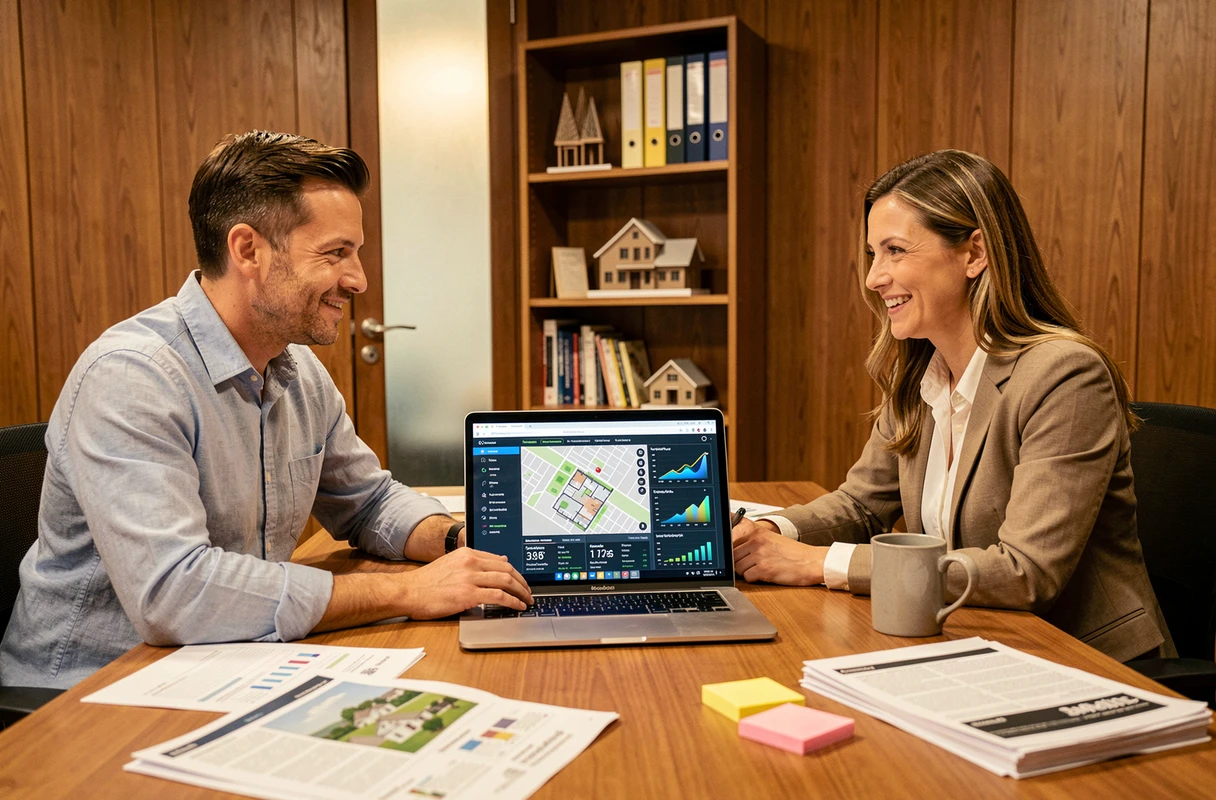
Traditional rental management software produces monthly or quarterly reports. Next-generation tools offer real-time updated dashboards, consolidating in a single interface rental vacancy, collected rents, pending charges, and performance by asset.
This centralization of data changes how a professional prioritizes their tasks. Instead of compiling information scattered across multiple files and email inboxes, they can visualize in seconds which property is underperforming and why.
A useful dashboard does not just display numbers. It must allow for data cross-referencing: an increasing vacancy rate on a specific unit, combined with a history of heavy maintenance, may indicate that it is time to reposition the property on the rental market or undertake value-enhancing work.
What the dashboard does not replace
Real-time data provides a clear view, but the decision remains human. A high vacancy indicator may be explained by a struggling local market, poorly calibrated rent, or a visibility issue with the listing. The tool signals the symptom. The professional diagnoses the cause and chooses the appropriate response.
Regulatory compliance integrated into property management tools
Rental regulations evolve regularly: rent control, mandatory diagnostics, tenant information obligations. Manually tracking these changes exposes one to oversights, and a lapse can be costly in litigation or administrative penalties.
Recent digital solutions integrate compliance as a native feature, directly into the management flow. The software automatically checks if a lease complies with the applicable rent ceiling, if technical diagnostics are up to date, or if a mandatory document is missing from the tenant’s file.
- Automatic alert as a diagnostic expiration approaches (DPE, asbestos, electricity)
- Verification of compliance with rent control during lease drafting
- Structured archiving of regulatory documents, accessible in case of inspection or dispute
This integration avoids the need to separately consult a regulatory calendar and a management tool. Compliance becomes a continuous process rather than a one-time check, reducing risk without adding administrative burden.
Choosing a property management tool is not just a matter of features. The quality of input data, user training, and compatibility with existing systems condition the outcome as much as the software itself. A poorly configured high-performance tool will produce unnecessary alerts and unusable reports. Technology accelerates what the manager already knows how to do; it does not compensate for what they do not master.