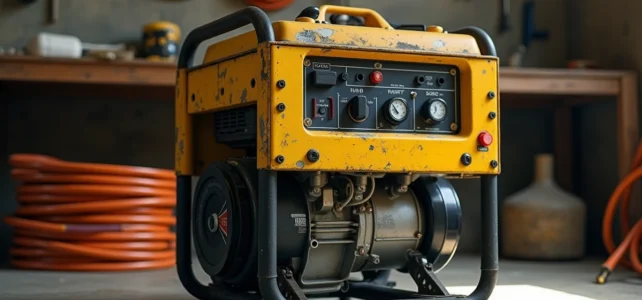
Zeus, a brand marketed under the name “ZEUZ” and distributed by Defitec, occupies a specific niche in the French generator market: entry-level and mid-range, focused on construction sites and home backup. Its gasoline models with 4-stroke engines equipped with an AVR regulator can be found on the shelves of several DIY stores.
The most common question is less about raw power than about the quality of the delivered current.
AVR Regulator vs. Inverter Technology: What Zeus Can and Cannot Power
The starting point for understanding the limits of a Zeus generator is the nature of its output current. All models in the conventional gasoline range come with a voltage regulator AVR. This device maintains the voltage around 230 V by correcting fluctuations related to load variations.
For construction tools, lighting, or a refrigerator, the AVR performs its role without difficulty. Field reports diverge on this point as soon as it comes to sensitive electronic devices. A computer, a home theater screen, or a home automation inverter operates with a clean sine wave. However, a conventional AVR generator produces a modified sine wave, with micro-variations in frequency and voltage that the AVR does not completely smooth out.
An inverter model (Honda EU10i, for example) generates a pure sine wave thanks to rectification and then electronic reconversion of the current. For a PC or audio equipment, the difference between modified and pure wave is not trivial: it can cause unexpected restarts, audio noise, or, over time, premature aging of power supplies.
Those considering a review of the Zeus generator will benefit from comparing not only the nominal power but also the quality of the electrical signal at the output.
Autonomy and Reliability of the Zeus Engine During Prolonged Outages
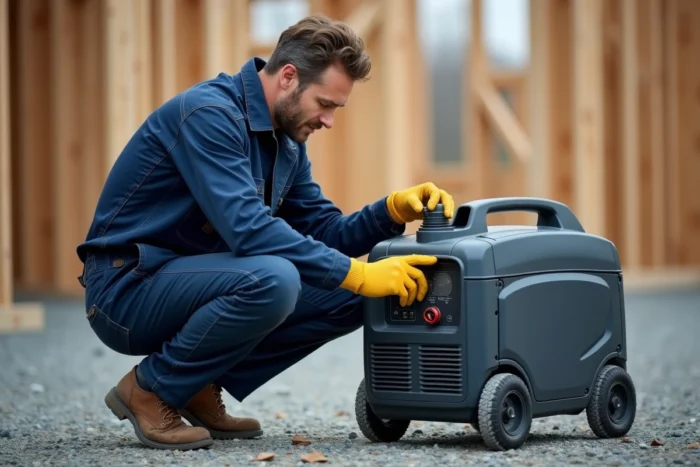
One of the arguments put forward by the brand concerns autonomy. On the 2400 W model, the technical sheet announces about 10 hours and 30 minutes on a 15-liter tank at standard load. This figure places Zeus in the higher average of gasoline generators in this category, making it a credible candidate for prolonged backup during outages lasting several hours.
The mechanical reliability in the medium term relies on a 4-stroke engine without notable technical particularities. The available online feedback is limited and does not allow for a clear trend to emerge regarding lifespan beyond two or three seasons of occasional use. The available data do not allow for conclusions about the engine’s behavior under intensive use (daily construction site, for example).
Points of Caution for Home Backup Use
- The manual start by recoil starter, standard on most Zeus gasoline models, requires physical intervention at each outage, a real drawback for households seeking an automated solution
- The noise level, not specified on all datasheets, remains typically high on conventional generators in this power range, which can be problematic in densely populated residential areas
- The absence of a 12 V or USB outlet on some models limits versatility for charging batteries or portable devices during an outage
Zeus Generator and Sensitive Devices: Should You Add an External Inverter?
The most common workaround for using an AVR generator with electronic equipment is to insert an uninterruptible power supply (UPS) between the generator and the devices. The UPS filters the incoming current and delivers a clean wave, thereby protecting the equipment.
This solution works, but it comes at a cost. An inverter capable of handling the load of a complete computer setup or a home automation system represents an additional investment that can approach the price of the generator itself on entry-level Zeus models. The total additional cost (generator + inverter) often exceeds that of an inverter of equivalent power.
However, the combination of Zeus + inverter has an advantage in terms of available power. Portable inverter generators rarely exceed 3,500 W, while the Zeus range offers gasoline and diesel models that go higher in nominal power. To simultaneously power a refrigerator, a freezer, a supplementary heating system, and a computer protected by an inverter, a high-powered Zeus coupled with a targeted UPS may prove more suitable than a small overloaded inverter.
Zeus Pricing Positioning Against Competing Brands in 2026
Zeus clearly positions itself below Japanese brands (Honda, Yamaha) and specialized European manufacturers (Pramac, SDMO). The prices found in DIY stores place Zeus models in an accessible range, comparable to brands like Einhell or certain models from Könner & Söhnen.
The power/price ratio remains Zeus’s main selling point. For occasional backup use on non-sensitive equipment (lighting, tools, basic household appliances), this positioning holds up. The calculation changes as soon as the protection of electronic devices is factored into the equation.
What is Lacking to Make a Decision
Several elements remain difficult to verify without extended independent testing:
- The actual stability of the AVR voltage under variable loads (simultaneous connection of several devices at different times)
- The failure rate of electrical components (regulator, alternator) after several hundred hours of operation
- The availability of Defitec/Zeus spare parts in the long term, a criterion that weighs heavily on the actual lifespan of the product
Zeus manufactures honest generators for their price segment, suitable for construction sites and home backup on resistive loads. To power sensitive electronics, an inverter or an intermediate UPS remains necessary.