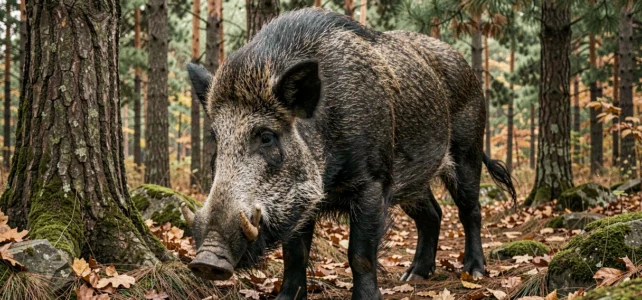
The Attila wild boar does not get its name by chance. This subspecies, classified as Sus scrofa attila, primarily lives in Turkey and Central Asia. It is distinguished by a size that far exceeds that of the common European wild boar. While a French specimen rarely exceeds 130 kg, the Attila wild boar commonly reaches this weight, and some individuals go well beyond.
Taxonomy of the Attila wild boar and confusion about subspecies
Hunting sites and hunting narratives present the Attila wild boar as the native subspecies of Anatolia. The taxonomic reality is more nuanced. Recent systematic studies indicate that the native wild boar of Anatolia is more likely Sus scrofa lybicus, sometimes referred to as the Anatolian boar, a smaller, paler, and almost hairless animal.
This distinction changes the perspective. The term “Attila” actually refers to a subspecies whose range covers a broader area, encompassing Central Asia up to Tajikistan. The commercial name has ultimately overshadowed the scientific classification, creating a blur that few online contents seek to clarify.
Have you ever seen photos of Turkish wild boars presented as “monsters” exceeding 200 kg? These individuals exist, but they do not necessarily represent the typical local population. The mixing of subspecies, food availability, and habitat conditions play a crucial role in the size attained by each animal. Those documenting the saga of the Attila wild boar in Turkey highlight this remarkable individual variability.
Attila wild boar and agricultural damage in Turkey: the downside of the legend
The Attila wild boar fascinates wildlife enthusiasts and hunters. On the ground, cohabitation with rural populations tells a very different story.
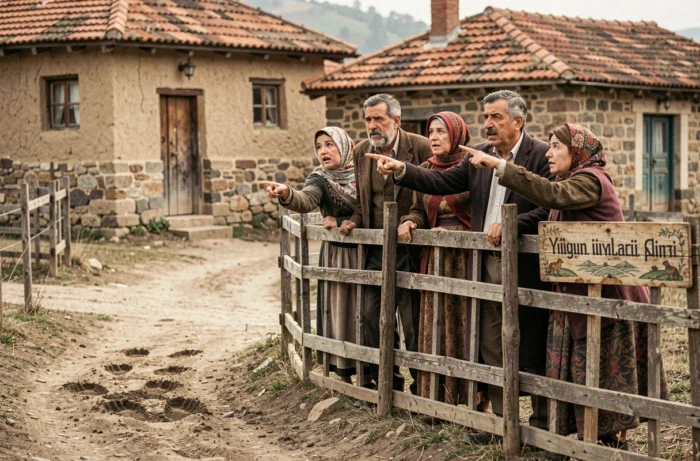
In recent years, the Turkish local press has documented a marked increase in wild boar intrusions into crops. Regions such as Yalova, Erzincan, Manisa, Kütahya, and Artvin report growing damage. Vineyards, corn fields, wheat, sunflower, beet fields, and vegetable gardens are affected.
Producers describe particularly difficult years, with damage far greater than in the past. In some areas, villagers keep watch at night to protect their plots. Administrative hunts are organized to try to contain the pressure.
Factors exacerbating the human-wild boar conflict
Why this escalation? Several elements come together:
- The lack of sufficient natural predators over vast Anatolian territories, allowing wild boar populations to grow without effective natural regulation
- The wild boar’s dietary adaptability, capable of consuming both roots and cereal crops, fruits, or waste
- The expansion of cultivated areas into previously wooded sectors, which mechanically brings wild boar habitats closer to agricultural plots
This conflict context is absent from narratives that celebrate the Attila legend. Hunting content emphasizes the trophy, rarely the consequences for Turkish rural communities.
Why the Attila wild boar reaches record size
The size of the Attila wild boar is not an isolated genetic accident. It results from the combination of several environmental and biological factors that, together, favor exceptional growth.
The forests and scrublands of Eastern Anatolia and Central Asia provide an abundant and diverse food resource. Acorns, roots, wild fruits, agricultural crops at the edges: the diet of the wild boar in these regions is rich in calories for much of the year.
An environment conducive to large sizes
The continental climate of inner Turkey imposes harsh winters. Animals that survive develop a larger body mass, a well-documented mechanism in mammals (Bergmann’s rule states that individuals are larger in cold climates). Turkish wild boars benefit from both a rich diet and a climatic pressure that selects for the most robust.
The low hunting pressure in some remote areas also allows males to reach their full growth potential. A European wild boar is often harvested young, before reaching its maximum size. In Turkey, in less hunted areas, individuals live long enough to become the giants that fuel the legend.
Name Attila and popular imagination: origins of a nickname
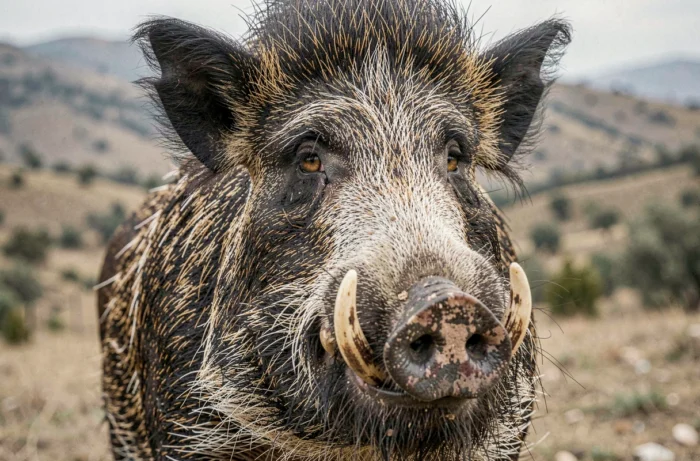
The choice of the name “Attila” to designate this subspecies is not trivial. Attila the Hun remains associated with brute power and invasion, two traits that the wild boar embodies in the imagination of the peoples of Europe and the East.
In Turkish and Central Asian folk legends, the wild boar occupies an ambivalent place. An animal of strength and courage, it is also one that ravages crops and challenges men. This dual status, between respect and fear, is reflected in how rural communities still speak of these beasts.
The parallel with the Hun conqueror works on several levels. The imposing size of the animal, its ability to devastate a field in one night, its presence in a territory that stretches from Anatolia to the steppes of Central Asia: everything recalls the empire of Attila, vast and feared.
From myth to hunting marketing
Hunting agencies have understood the narrative potential of this name. “Attila wild boar” immediately evokes a challenge, an extraordinary trophy, an adventure. This marketing positioning has helped to make the subspecies known far beyond naturalist circles.
The result is a mix of zoological facts and commercial storytelling. The scientific reality of the Turkish wild boar is more complex than the epic narrative that is told. Between taxonomic confusion, agricultural issues, and the tourist pressure related to hunting, the Attila wild boar crystallizes tensions that its glorious nickname does not reveal.
The Attila wild boar remains a fascinating animal due to its size and adaptation to varied environments. Its legend, built as much by biology as by marketing, masks less glamorous ground realities: conflicts with farmers, persistent taxonomic blur, and increasing pressure on Turkish rural ecosystems.