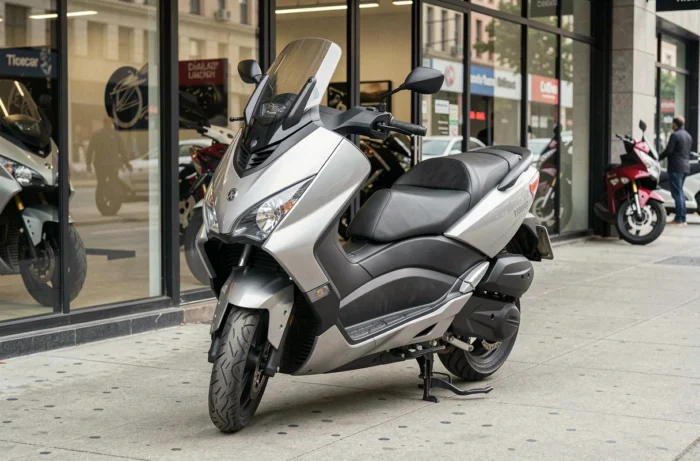
In 2026, the Yamaha TMAX’s price varies depending on the version, actual model year and additional dealer fees. Between the list price, setup costs and the value of any trade-in, the differences can quickly amount to hundreds of euros. This article examines the costs most likely to push the total up, backed by data.
Actual engine displacement and the TMAX’s commercial name: confusion that skews comparisons
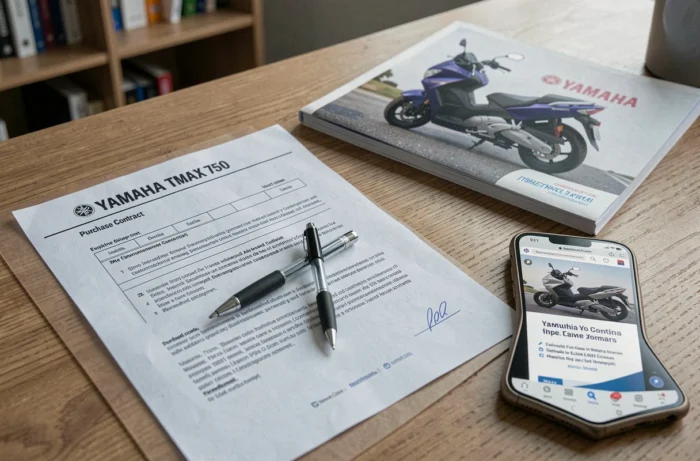
Before comparing prices, one point needs clarifying: the available sources describe a 562 cc TMAX 560, not a 750 cc model. The name “TMAX 750” appears on some forums and social media, but it does not match the official designation in the Yamaha Motor Europe catalogue.
This confusion has a direct impact on your budget. Buyers searching for a “TMAX 750” risk comparing listings for different models: older TMAX 530 generations, standard 560 or Tech Max versions, and even the 25th Anniversary Edition. Each variant has a different price and equipment level.
Anyone looking to assess the price of the TMAX 750 in 2026 should check the exact model designation (engine displacement, trim and model year) in the vehicle documents before committing to a purchase.
TMAX 560 Standard, Tech Max and Anniversary Edition: equipment differences at a glance
Price should not be considered in isolation. Compare each version item by item, based on what comes as standard. The table below summarises the differences reported by Yamaha and French dealerships.
| Feature | TMAX 560 Standard | TMAX 560 Tech Max | 25th Anniversary Edition |
|---|---|---|---|
| Traction control | Basic | Adjustable | Adjustable |
| Engine modes | Limited | Reconfigured, more numerous | Reconfigured, more numerous |
| Connectivity | Standard | Enhanced | Enhanced |
| Electrically adjustable windscreen | No | Yes | Yes |
| Heated grips and seat | No | Yes | Yes |
| Cruise control | No | Yes | Yes |
| Adjustable rear suspension | No | Yes | Yes |
| Exclusive colour | No | Crystal Graphite | Dedicated anniversary livery |
| Limited edition | No | No | Yes |
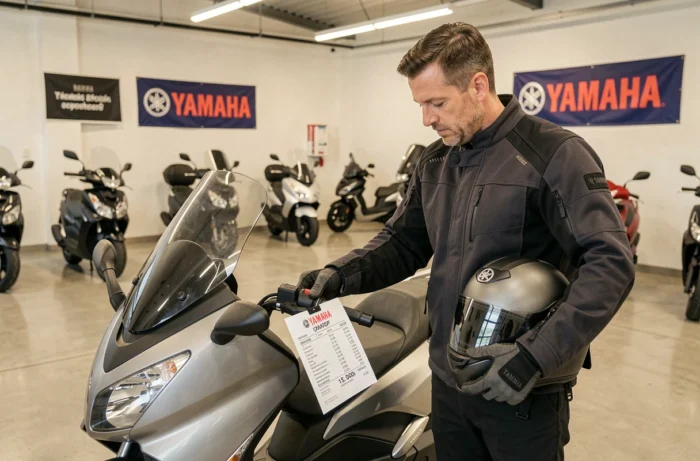
The table shows that the difference between the Standard and Tech Max versions comes down to comfort features (heated equipment, electric windscreen and cruise control). For exclusively urban use, these options matter less than they do for a daily mix of city and road riding or year-round use.
The 25th Anniversary Edition has the same equipment level as the Tech Max, with a special livery and limited production run. There is a premium for its rarity, but no additional technical benefits.
List price and setup costs: an item that is not always detailed in quotes
A maxi-scooter comparison published by a specialist website states that the prices listed are excluding on-the-road fees and vary depending on the version and time of year. This is rarely made clear in online listings or dealership showrooms.
Setup costs include several items:
- Registration fees (vehicle registration document), which depend on the vehicle’s tax horsepower and region
- Dealership vehicle preparation (accessory fitting and pre-delivery checks)
- Administrative or processing fees, which vary from one dealer network to another
Buyers comparing two offers based only on the advertised price may find a difference of several hundred euros once they receive the full quote. The best approach is to request a written quote itemising every charge before signing.
2026 model year or simply first registered in 2026?
A recent registration date does not guarantee that the scooter is from the latest generation. A TMAX built in 2024 may be registered for the first time in 2026 if it has remained in stock. The exact model designation on the registration document and the vehicle identification number can clear up any ambiguity.
This gap between production and registration also affects resale value. An older-generation model registered late depreciates faster than a current model year, because the used market is based on the model year, not the registration date.
Trading in an older TMAX: the depreciation dealerships don’t highlight
The most common financing arrangement is to trade in a TMAX 530 or 560 to reduce the deposit on a new model. Dealerships often apply a larger discount to the trade-in than the difference between the vehicle’s value and private-sale prices on the used market.
Three factors can make this undervaluation worse:
- The vehicle is assessed using the dealership’s internal criteria, not Argus or average prices found online
- Buyers who negotiate the trade-in and purchase on the same day lose all their leverage: the seller knows the decision has already been made
- Reconditioning costs for the trade-in (tyres, brake pads and belt) are deducted before valuation, even if the scooter is still running properly
Getting your old TMAX valued by two or three independent sources (classified-ad sites and other dealerships) before visiting the seller of the new model gives you a concrete benchmark. The difference between a dealership trade-in and a private sale can be significant.
Cost of owning a TMAX 560: maintenance and warranty over time
The purchase price is only part of the budget. Maintaining a maxi-scooter in this category involves regular costs: engine oil, gearbox oil, drive belt, brake pads and tyres. The TMAX has a twin-cylinder engine and geared transmission that require specific gearbox oil.
Yamaha offers a warranty of up to five years, depending on the dealer network’s terms. It is worth reading the details of what the warranty does and does not cover: normal wear and tear on consumables is generally excluded, and the manufacturer’s maintenance requirements must be followed to keep the warranty valid.
Buyers who factor three to five years of maintenance costs into the purchase price get a more realistic picture of the total budget. This figure—the overall cost of ownership—is what makes it possible to compare the TMAX with its direct rivals in the premium maxi-scooter segment.