Growing a vegetable garden without synthetic products is no longer a militant choice reserved for a few enthusiasts. Since January 1, 2019, the Labbé law prohibits individuals from using most synthetic phytopharmaceutical products. An order from January 15, 2021, even extended this ban to private properties used for housing starting July 1, 2022. Gardening naturally has become the default legal framework.
One practical question remains: where to start when you want to prepare your soil, choose your crops, and manage pests without resorting to chemicals? This article details three concrete approaches to launching an ecological vegetable garden that truly produces.
Living Soil in the Vegetable Garden: Nourishing the Earth Before Nourishing the Plants
You may have noticed that forest soil is soft, dark, and teeming with life? This is no coincidence. Dead leaves, plant debris, and microorganisms work there constantly. An ecological vegetable garden aims to replicate this mechanism.
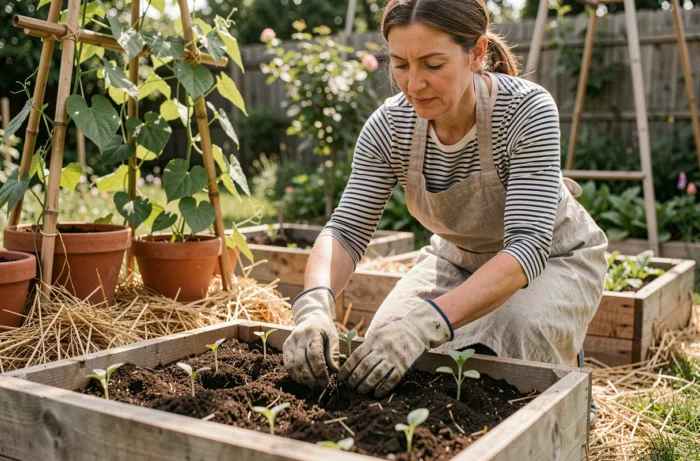
The first step is to never leave the soil bare. Soil exposed to wind and rain compacts, erodes, and loses its organic matter. Covering the ground with mulch (dead leaves, straw, chipped branches) protects the surface and feeds the earthworms that aerate the soil deeply.
Before sowing, work the soil without turning it over. Instead of traditional digging that buries the living layers, a tool like the grelinette loosens the soil without disturbing its structure. To choose a model suitable for your area and morphology, the references available on grelinette-warrior.com allow you to compare existing options.
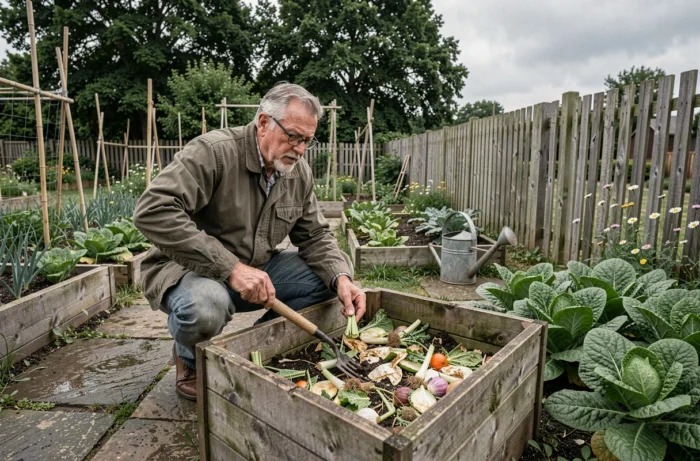
Compost replaces chemical fertilizers. It provides nitrogen, phosphorus, and potassium in a form that soil microorganisms slowly transform. Well-decomposed compost is spread on the surface, not buried: worms and rain take care of incorporating it. If your soil is heavy and clayey, add compost every autumn for two or three years. The difference in texture will be noticeable by the second season.
Crop Associations and Rotation: Two Levers Against Diseases
Planting the same vegetables in the same spot every year depletes the soil and concentrates pathogens. Crop rotation breaks this cycle. The principle is simple: alternate botanical families in the same plot from one year to the next.
Specifically, divide your vegetable garden into three or four zones. Each zone hosts a different family each season:
- Leafy vegetables (lettuce, spinach, cabbage) consume a lot of nitrogen. They are planted first in a freshly amended plot with compost.
- Fruit vegetables (tomatoes, zucchinis, peppers) follow the next year. They benefit from the residual nitrogen and appreciate already structured soil.
- Legumes (beans, peas, broad beans) come in third. They fix atmospheric nitrogen in the soil thanks to the bacteria in their roots, recharging the plot for the next cycle.
- Root vegetables (carrots, turnips, radishes) are interspersed in a fourth zone. They loosen the soil deeply through their growth.
Rotating crops every three to four years reduces pest pressure without any treatment. Tomato blight, for example, struggles to survive in soil where no nightshades have grown for two seasons.
Plant associations complement this strategy. Some combinations have long been documented by gardeners: carrots and leeks protect each other from carrot flies and leek moths. Marigolds, planted at the edge of the plot, repel several types of nematodes thanks to their root secretions.
Local Varieties and Sowing Adapted to the Climate
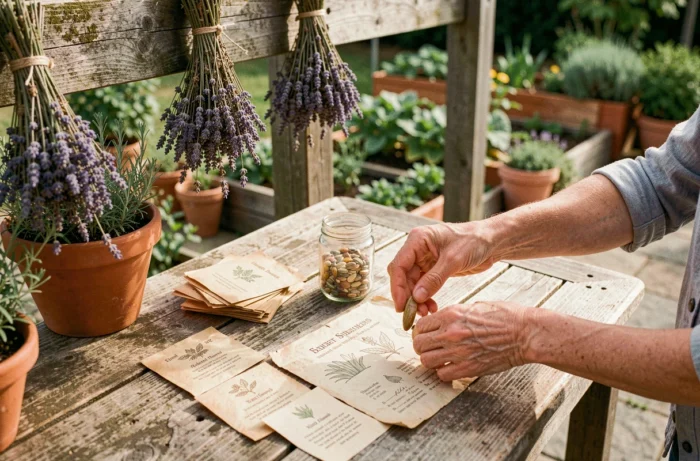
The choice of seeds is as important as their location. Old and local varieties are better adapted to your region’s conditions because they have been selected there for generations. A tomato suited to your climate will require less watering and will be less prone to disease than a hybrid designed for intensive production.
For sowing, follow the lunar calendar if you wish, but especially the soil temperature. Sowing beans in soil below 12 °C will cause them to rot before germinating. It’s better to wait an extra week than to lose an entire row.
Managing Vegetable Garden Pests Without Synthetic Pesticides
The law now only allows three categories of products for individuals: biocontrol products, low-risk products, and those permitted in organic farming. In practice, the best protection remains preventive.
Encouraging natural predators effectively replaces insecticides. A pile of dead wood in a corner of the garden attracts hedgehogs, which are great consumers of slugs. An insect hotel or simply hollow stems assembled together provide refuge for lacewings and hoverflies, whose larvae devour aphids.
Plant extracts (nettle, comfrey, horsetail) strengthen crop defenses. Nettle extract stimulates growth and helps plants resist fungal attacks. Horsetail decoction, rich in silica, strengthens the cell walls of leaves and limits blight. These preparations fall into the category of biocontrol products.
Water and Mulching: The Anti-Waste Duo
A thick layer of mulch limits evaporation and reduces watering needs. Water early in the morning or late in the day, directly at the base of the plants. Drip irrigation uses much less water than sprinkler irrigation, and it avoids wetting the foliage, which slows down fungal diseases.
Collecting rainwater complements the system. Even a single collector of a few hundred liters covers a significant part of a small vegetable garden’s needs during dry weeks.
Ecological gardening is based on a principle that French regulations have ultimately made mandatory: working with the soil and biodiversity rather than against them. A well-mulched, properly amended vegetable garden planted according to a rotation plan produces healthy vegetables without resorting to chemical inputs. The first harvests require patience, but the soil improves each year, and the results follow.