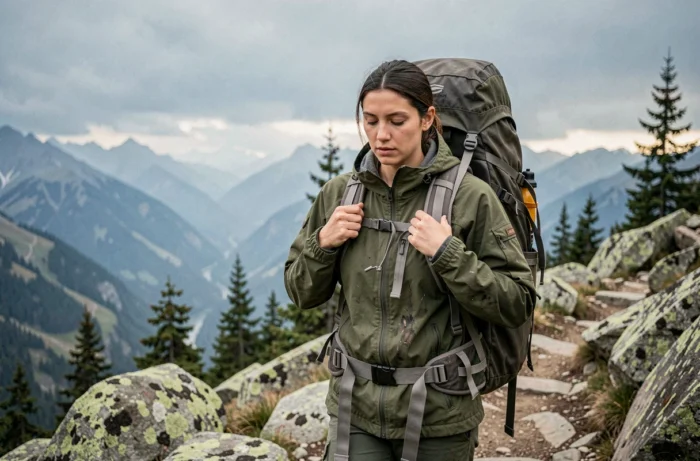
A poorly calibrated bag, an undersized insulating layer, or an unsuitable filtration system can turn a nature outing into a logistical nightmare. Here, we discuss equipment for the great outdoors from the perspective of the technical specifications that make a difference in the field, rather than just a simple checklist.
Carrying System: Choose the Backpack by Suspension, Not by Volume
The volume of a hiking or camping backpack is only a secondary indicator. What determines comfort for a full day is the design of the back and the distribution of the load on the lumbar belt.
An internal aluminum frame transfers most of the weight to the hips. Models with a taut back (suspended mesh) ventilate better but lose stability as soon as the load exceeds ten kilograms. The choice of suspension type determines the entire carrying experience.
For a multi-day trek in the mountains, we recommend a bag with a padded and molded lumbar belt, with side tightening points. For a day trip, a lighter contact-back bag is sufficient, provided you do not exceed the load threshold recommended by the manufacturer.
This threshold varies by brand and model: checking it before purchase can prevent a lot of neck pain. To compare different options and technical specifications, you can view the equipment on L’Esprit Nature before finalizing your choice.
Hiking Shoes: Upper, Sole, and Support According to Terrain
The distinction between low, mid, and high tops is not a matter of preference: it depends on the elevation, the weight carried, and the nature of the ground.
On a stabilized trail with a light bag, a low top offers mobility and lightness. As soon as the terrain becomes technical (scree, roots, wet passages) or the bag exceeds a significant load, a mid top provides ankle support that reduces the risk of sprains.
The sole deserves as much attention as the upper. Rubber compounds like Vibram or equivalents ensure superior grip on wet rock. The rigidity of the midsole (between the outsole and the insole) protects the arch during prolonged rocky passages. A model that is too soft on a mountain trek tires the foot in a few hours.
Waterproofness and Breathability of Shoes
Waterproof-breathable membranes (like Gore-Tex or equivalent) block external water but slow down the evacuation of sweat. In hot and dry conditions, a shoe without a membrane dries faster after crossing a stream. In prolonged humid conditions, the membrane remains relevant.
Sleeping Gear and Tent: Thermal Insulation and Weight to the Gram
The combination of sleeping bag and camping mattress forms the core of the sleeping system. The comfort temperature stated on a sleeping bag generally distinguishes comfort temperature, limit, and extreme. Only the comfort temperature is reliable for normal use.
- Down filling: best warmth-to-weight ratio, but loses its insulating power if wet. Requires a waterproof compression sack or a dry bag.
- Synthetic filling: retains some insulation even when wet, dries faster, but is bulkier for the same volume.
- Insulating mattress: the R-value (thermal resistance) is the criterion to check. The higher the R-value, the better the mattress insulates from cold ground.
The mattress contributes as much to insulation as the sleeping bag. A high-end down sleeping bag placed on a low R-value mattress loses a significant part of its performance through conduction with the ground.
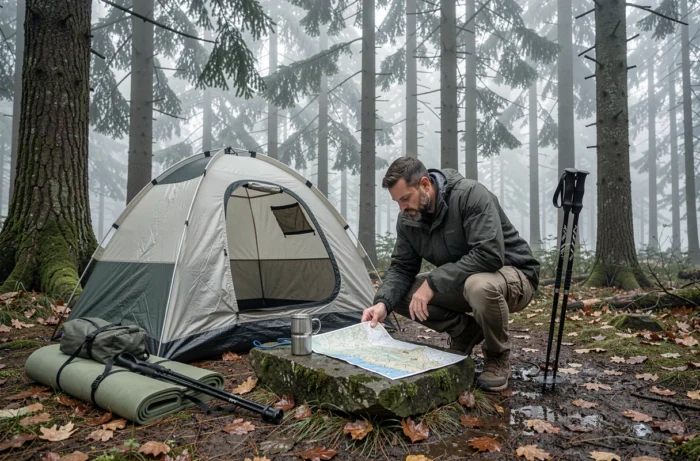
On the tent side, the discriminating criterion for mobile camping remains the ratio between packed weight and usable floor area. A freestanding tent (crossed poles) can be set up on all types of terrain, including rocky slabs. A non-freestanding tent requires anchoring points in loose soil.
Water Treatment and First Aid Kit: Two Items Often Overlooked
Most articles on outdoor equipment mention the water bottle. We emphasize the treatment system that accompanies it. In the mountains as in the forest, not all water sources are potable, even when they appear clear.
Three technologies coexist:
- Pump or gravity filter: eliminates bacteria and protozoa, but not viruses.
- Chemical purification (chlorine dioxide tablets): effective against viruses and bacteria, but has a longer action time and residual taste.
- UV purification (like SteriPEN): fast and tasteless, but relies on a power source. The reliability of the battery in cold conditions remains the weak point of portable UV purifiers.
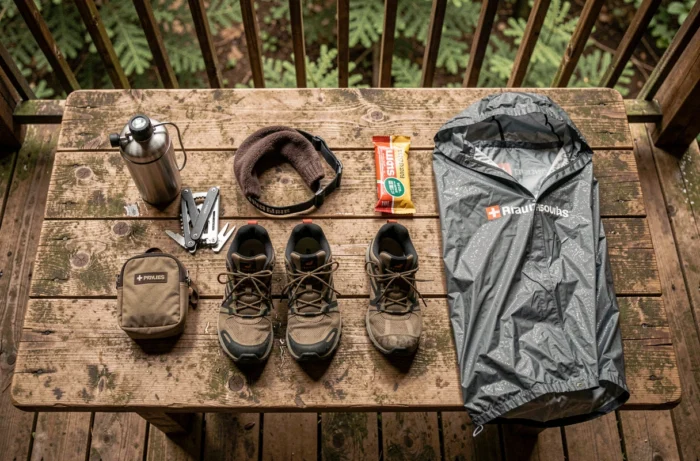
For the first aid kit, the standard contents (band-aids, antiseptic, compression bandage) are not sufficient for prolonged autonomy. A tick remover, a survival blanket, and a unit dose antiseptic are useful additions to the kit. The total weight of a well-thought-out kit does not exceed a few hundred grams.
Technical Clothing: The Three-Layer System Remains the Standard
The principle of layering in three layers (base, insulation, protection) is not a marketing gimmick. It is a thermal regulation system proven by decades of practice in the mountains and in extreme conditions.
The base layer, made of merino wool or synthetic material, wicks away sweat. Cotton, which retains moisture and cools the body, has no place in a hiking or camping bag. The mid-layer (fleece, synthetic down, or down) traps warm air. The outer layer (waterproof-breathable jacket) blocks wind and rain.
A common mistake is to oversize the insulation layer and neglect the outer layer. A thick down jacket without a windproof jacket on top loses its warmth in minutes in the face of strong winds.
The choice of clothing also depends on the season and altitude. In summer at low altitude, the insulation layer can be limited to a lightweight micro-fleece. In autumn in the mountains, a synthetic down jacket offers a better compromise between versatility and moisture resistance than down.
Every gram added to the bag translates into fatigue on the trail. Balancing comfort at camp and lightness while hiking is the real preparation work, long before buckling the first strap.